My Students Make These English Mistakes — Do You?
By Ruben — English Teacher & IELTS Coach, English for Traveling
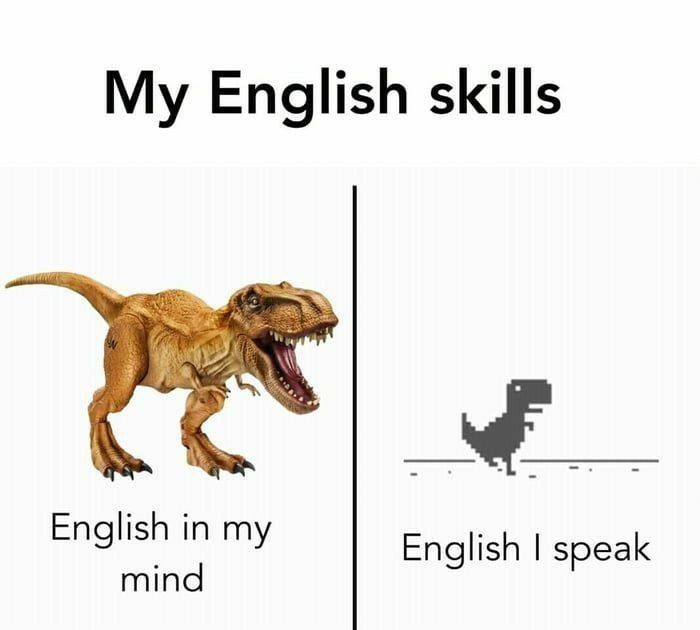
I keep a log of errors my students make during lessons. Not to embarrass anyone — but because the same mistakes come up again and again across different nationalities and levels.
These are real sentences from one of my Chinese students. Many of them are classic L1 interference errors — places where Chinese grammar patterns get carried over into English. If you’re a Chinese learner, you’ll almost certainly recognise some of these.
In Chinese, there are no articles (the, a, an), no plural noun endings, and modal verbs work differently. English collocations also don’t follow the same logic as Chinese word combinations. These differences explain why the same patterns keep appearing — and why simply “knowing the rule” isn’t always enough to fix them.
1. “I want to save many money.”
✅ I want to save a lot of money.
💡 Money is uncountable in English — you can’t count individual “moneys.” Uncountable nouns need much or a lot of, not many.
- many → countable things (many students, many mistakes)
- much / a lot of → uncountable things (much money, a lot of water)
In Chinese, there’s no grammatical distinction between countable and uncountable nouns, so learners often apply many to everything. It’s one of the first patterns worth fixing.
✅ “I’m trying to save a lot of money before I travel.”
2. “It happened in 1990s.”
✅ It happened in the 1990s.
💡 Decade names always take the in English — always.
- the 1980s, the 1990s, the 2000s
Chinese doesn’t use articles at all, so the is one of the most common and persistent errors for Chinese learners at every level. It’s a small word, but native speakers notice when it’s missing.
✅ “Fashion in the 1990s was very different from today.”
3. “There has been a lot of urban explanation.”
✅ There has been a lot of urban expansion.
💡 This is a vocabulary confusion error — explanation and expansion look and sound similar but mean completely different things.
- explanation = making something clear
- expansion = growing or spreading outward
This type of error is common in IELTS Writing Task 1 and Task 2, where academic vocabulary matters. Keeping a vocabulary notebook with example sentences — not just definitions — helps avoid this.
4. “Education is equally important than health.”
✅ Education is equally important as health.
💡 Equally pairs with as, not than.
- more important than ✅
- equally important as ✅
- equally important than ❌
This is a common IELTS Writing mistake that directly affects the Grammatical Range & Accuracy score.
5. “Many young people attend to university.”
✅ Many young people attend university.
💡 Attend doesn’t need a preposition. It’s a transitive verb — it goes directly to its object.
- attend university ✅
- attend a meeting ✅
- attend to university ❌
Compare with go to university, which does use to. That’s why this one catches people out.
6. “He talked about his study background.”
✅ He talked about his academic background.
💡 Study background is a direct translation that doesn’t work in English. The natural collocation is academic background.
Collocations — fixed word combinations that native speakers use together — are one of the biggest differences between textbook English and natural English. You can’t always predict them from logic; they need to be learned in context.
Other natural collocations with background:
- professional background
- cultural background
- family background
7. “She is very skillful to learn languages.”
✅ She is very skillful at learning languages.
💡 Skillful is always followed by at, not to.
- good at, skillful at, talented at, experienced at
When you learn a new adjective, always note the preposition that goes with it. It’s not always logical — it needs to be memorised.
8. “We need more graduate citizens.”
✅ We need a more educated population / a more skilled workforce.
💡 This phrase was translated directly from Chinese and doesn’t work in English. Graduate as an adjective describes someone who has completed a degree — not a general quality of a population.
More natural alternatives:
- an educated population
- a skilled workforce
- highly qualified graduates
In IELTS Writing, this kind of unnatural phrasing affects your Lexical Resource score even when the idea behind it is clear.
9. “The modern life require a good education.”
✅ Modern life requires a good education.
💡 Two errors in one sentence — both typical for Chinese L1 speakers.
Error 1 — unnecessary article: Life used in a general sense doesn’t need the.
- The modern life ❌ → Modern life ✅
- Same rule: the nature → nature, the society → society
Error 2 — subject-verb agreement: Life is singular, so the verb needs an -s.
- life require ❌ → life requires ✅
10. “This will totally different in the future.”
✅ This will be totally different in the future.
💡 Will is a modal verb — it can’t go directly before an adjective. You need will + be.
In Chinese, adjectives can follow modal-equivalent words directly without a linking verb, which is why will be often gets compressed to just will.
- will different ❌ → will be different ✅
- might changed ❌ → might change or might be changed ✅
- could better ❌ → could be better ✅
This error appears regularly in both IELTS Writing and Speaking.
The Pattern Behind the Mistakes
Looking at this list, most of these errors fall into a few clear categories:
- Article errors — adding or omitting the incorrectly
- Collocation errors — using a word that’s close but not natural
- Preposition errors — the wrong preposition after a verb or adjective
- Grammar structure errors — missing be after a modal
These patterns are extremely common among Chinese learners of English — not because of lack of ability, but because Chinese and English are structurally very different languages. Awareness of your specific L1 interference patterns is one of the fastest ways to improve.
The fix for all of them is the same: read and listen to more real English in context. Grammar rules help, but exposure is what makes these patterns feel automatic.
Are You Making These Mistakes?
If any of these looked familiar, don’t worry — they’re fixable with focused practice.
👉 Download my free guide: Stop Saying These 10 Things in English
📺 Free lessons: youtube.com/@EnglishForTraveling
🌐 englishfortraveling.com
📩 info.englishfortraveling@gmail.com
© 2026 English for Traveling. All rights reserved.

 English for Traveling